

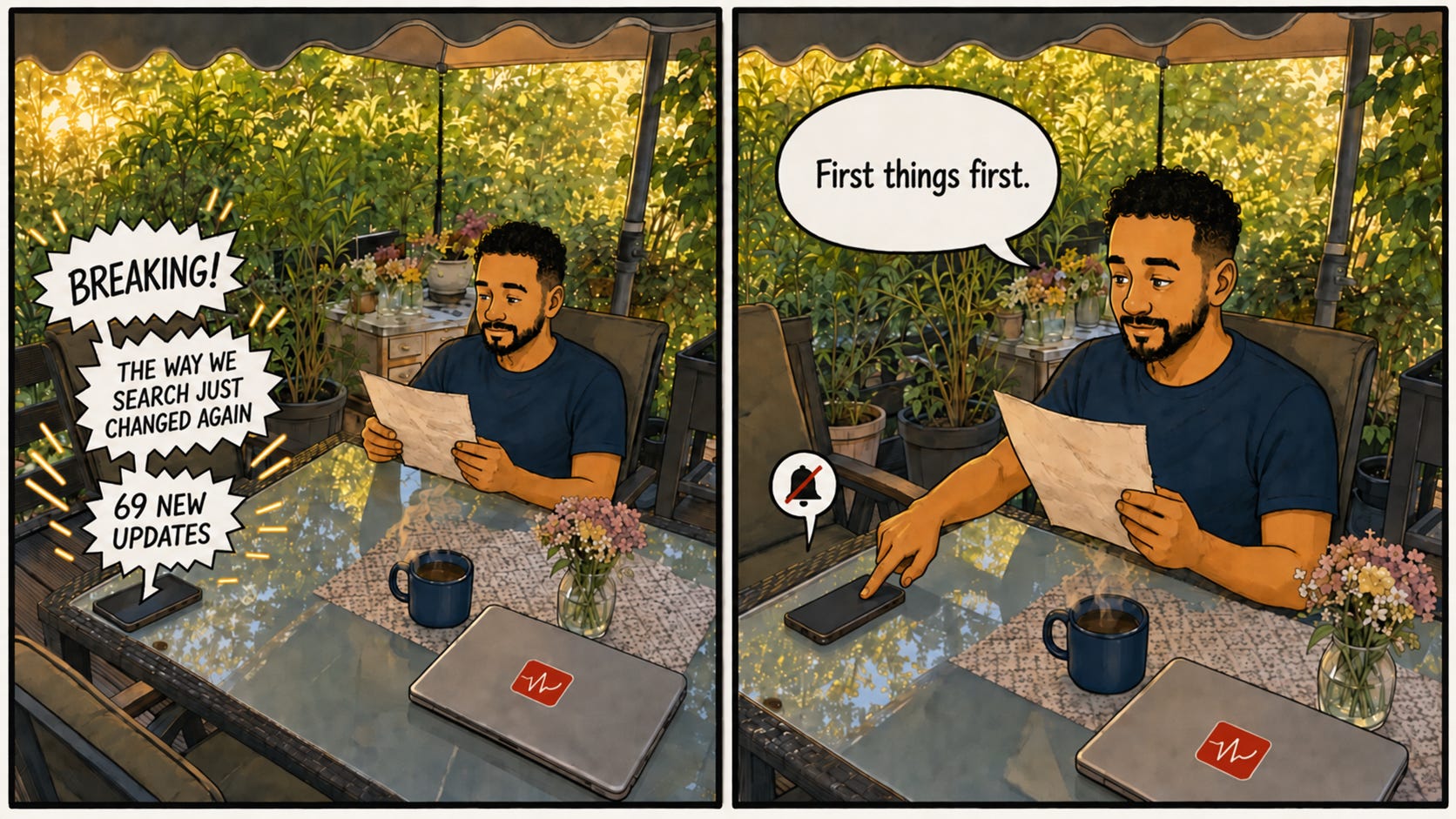
Each morning, before email, news, or social media, before anyone needs anything from me, I try to get my mind right by reading the same list.
It’s essentially a list of daily leadership principles and values I’ve collected and curated over more than a decade of building and being on different teams, making mistakes, learning from them, learning from other people and reading books by people a lot smarter than me. I keep testing it against real life, I add what seems valuable, and then I’ll keep it if it holds up at work and in my life as a partner and a father. Originally, I would look at the list maybe once a month, but the principles were easy to forget, so now I review them at the beginning of each day, and find that they’re more likely to come back to me when I’m making a decision. That’s what makes it work for me.
So I thought I’d make this the first post on Travel Search Pulse rather than start with an essay about travel SEO or GEO. The about page tells you what I’ve done if you want to check that out, but this post tells you a little more about the kind of person I am and how I think.
One book has influenced this list more than any other: David J. Schwartz’s The Magic of Thinking Big. The first seven principles below either come directly from it or are my own shorthand for ideas in it, and the stories and reflections about what they’ve meant in my life are mine.
1. “Action cures fear.” Indecision and delay only feed it. I don’t know that I’ve ever done anything I felt completely ready for. I do know that the longer I wait, the more that knot of anxiety grows in my stomach. So when I catch myself thinking about something for like a third straight week instead of doing anything about it, I know what’s really going on. I’ve been thinking about creating Travel Search Pulse for a long time. Publishing this first post is me finally doing something about it.
2. Ask “Is it really important?” before getting worked up. I’ve learned from both work and personal relationships that much of what aggravates people doesn’t pass the test. I sometimes wonder how many problems between people, especially in the workplace, wouldn’t even happen if we approached challenging situations by first asking, “Is this really important?” I developed a real appreciation for this principle during my time as Managing Director of KAYAK Germany. Helping folks in the office work through conflict usually started with just listening long enough to understand what was actually bothering them. A lot of the time, the issue wasn’t as big as it felt at first, and a little communication and a little reflection could help team members get over the hurdle and back to working together productively.
3. “Look at things not as they are, but as they can be. Visualization adds value to everything.” This has been huge for me. Over the last decade, I was promoted four times, and this mindset helped me grow into each new role. I always tried to do more than was asked of me by staying curious about what “better” might look like and asking how we could take things further. It made work more fun too. In particular, I’ve always loved looking at what competitors are doing and asking how we might do it even a little better. There’s so much precedent out there. You just have to go explore it.
4. “Concentrate on what the other person says.” Don’t just hear. Listen. It’s about much more than keeping your own mouth closed. I’ve been in a lot of meetings where people were clearly just waiting for someone to stop talking so they can make their point. I hate when that happens. It’s such a waste of time. “Listening means letting what’s said penetrate your mind.” That makes conversations more fruitful and productive and can give you real advantages as a leader. During a leadership workshop, my peers gave me really nice feedback about how well I listened. I remember smiling and thinking, that’s because I remind myself every single day about how important listening is.
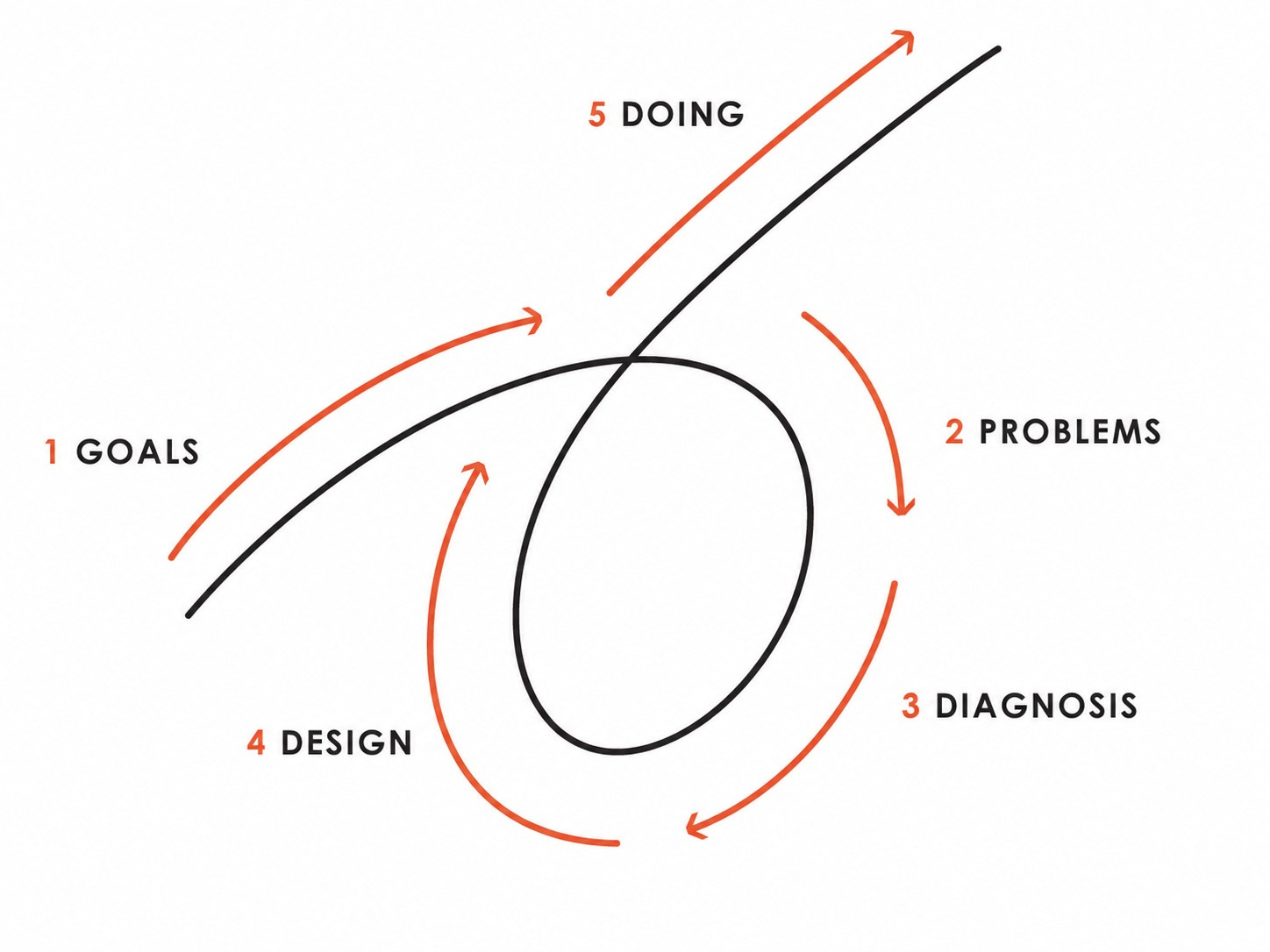
5. Study your setbacks. When you lose, learn, adjust and try to win the next one. Be your own constructive critic. Don’t blame luck. Use critical thinking, work out what went wrong and what you can do differently. This is a muscle I’ve had to develop over the years in SEO. Algo updates and search layout changes have a way of humbling you, then forcing you to adapt.
The following diagram does a good job of illustrating how you can get yourself back on an upward trajectory when problems knock you off course.
6. Combine persistence and experimentation. Stay with your goal, but don’t keep doing the exact same thing and expect a different result. Earlier in my career, I often had to do a lot of persuading just to get a proposed project approved. Subjectivity carried more weight, decisions took longer than I would like, and the HiPPO effect (the highest-paid person’s opinion) felt very real. Once our team adopted an experimentation mindset and the tools to support it, conversations felt different. They were better. We ran more split tests, made decisions faster and let the numbers carry more of the argument. It also became harder to kill someone’s idea based only on opinion. If it had a measurable hypothesis, we could say, “Alright, let’s test it and see,” then prioritize it accordingly.
7. “Trade minds with the people you want to influence.” This is one I remind myself of every day because it just helps me be more thoughtful with others. When I have enough awareness and presence to catch myself, I try to think about how something I’m about to say or do will land with the other person. It’s been really useful when working with stakeholders in other teams over the years. If I’ve needed something from someone in another team, I first try to understand what they want and what they’re trying to achieve in their own team. Every time I can align my goal with theirs, buy-in and enthusiasm come much more easily.
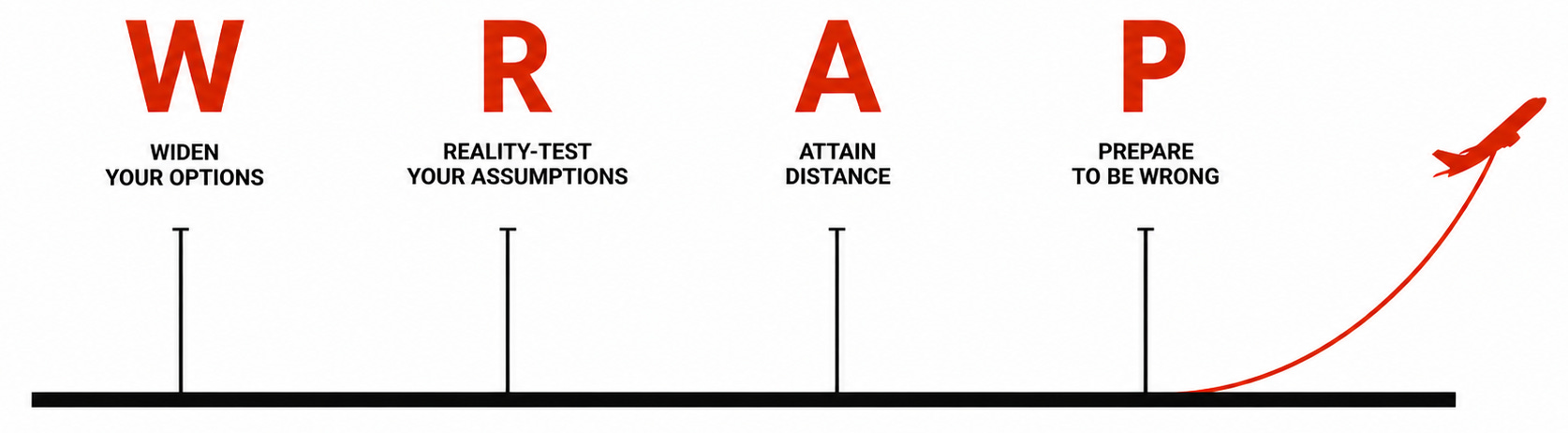
8. Use the WRAP process to make better decisions. I think I use this more than anything else on the list, and a lot of people I’ve worked with over the years will remember how often I bring it up. It’s easy to have an immediate answer to a challenge and run with it. WRAP makes me take a step or two back and:
Widen my options to consider if there’s a better or more efficient way to achieve something.
Reality-test my assumptions, usually by testing something before scaling it
Attain distance before deciding, usually by giving myself more time if possible
Prepare to be wrong by thinking through what happens if the decision doesn’t work out and how I might adapt.
Sometimes that reveals a better approach, and other times it validates my original thinking, which just means I can move forward with more confidence. I’ve even incorporated WRAP alongside other frameworks into a Claude skill for AI-assisted work. It’s the skill I use most, and I share it for free in the welcome email when you subscribe to Travel Search Pulse.
I’ve found WRAP valuable at work, in my personal life and now in how I work with AI.
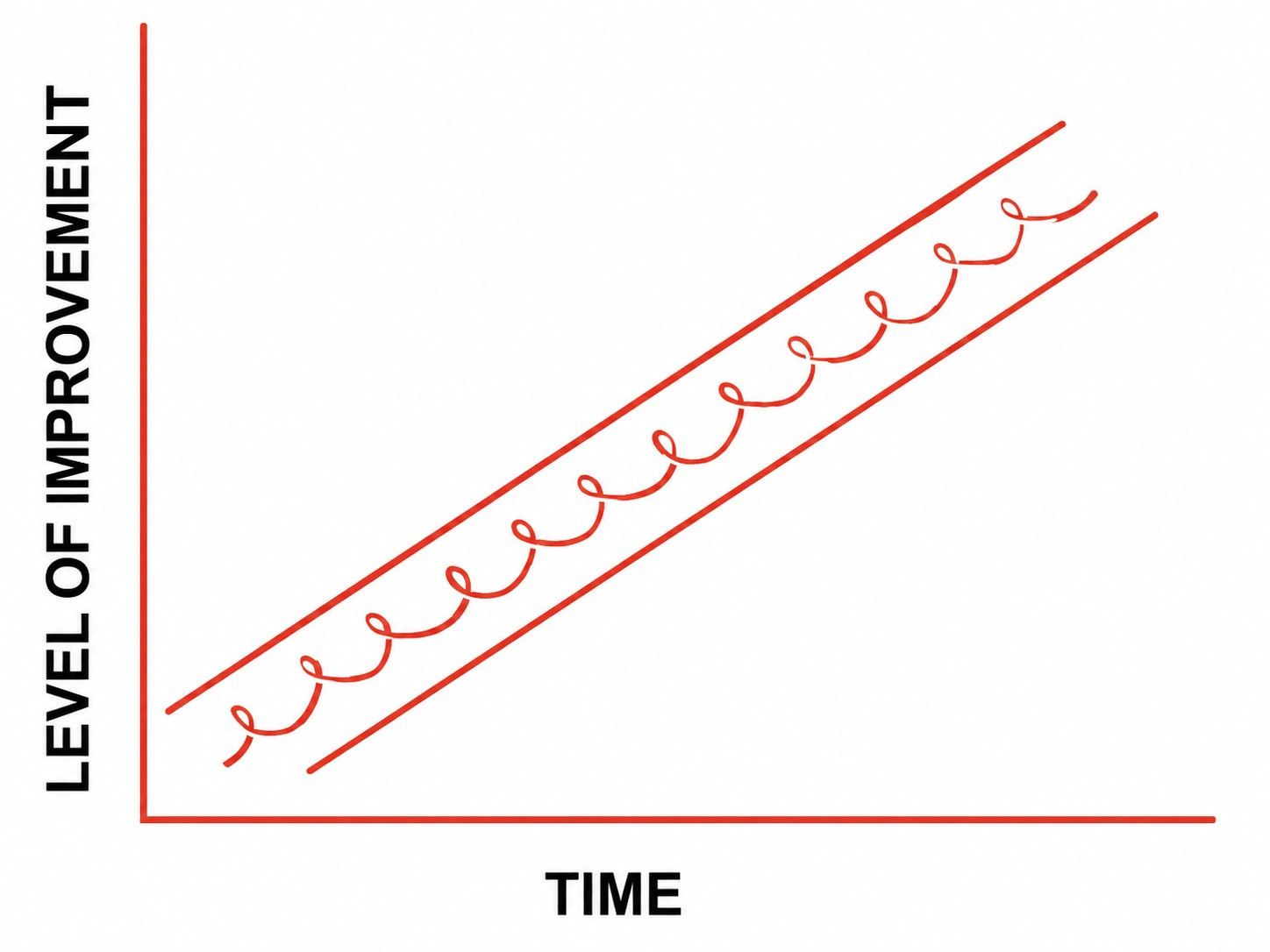
9. Review and reflection is the amplifier of learning. Thinking is working. For the longest time, I never thought this way, and now I really appreciate that I do. I first heard this one from Mark Jenkins, my coach during a leadership program with the leadership development company Coverdale, and it stuck harder than most of what I’ve read. It’s a motivator behind why I make time to review this list every day. Experience teaches you something, but taking time to review what happened and what you might do differently going forward makes the experience so much more valuable. It’s also why I like doing retrospectives at the end of an Agile sprint. When I was first introduced to the Scrum framework, I cringed. I thought it would be a bureaucratic process that slowed me down (I didn’t want to get processed to death 😅). It did the opposite, though. It helped me learn, adapt and make the next sprint better.
I think this pairs nicely with the diagram below, which illustrates how repeated cycles of review, learning and adjustment raise your level of improvement over time:
10. Growing myself is the most generous thing I can do for those I love. This one has helped me most in my personal life, although it matters at work too. I’ve tended to put others ahead of myself, which can mean overworking, skipping things that bring me joy and not getting enough rest until I’m drained. It’s easier to give from abundance than from an empty cup. How are you gonna lift someone else up if you can’t lift yourself up? This principle has made me prioritize exercise and take better care of my body as well as my mind. Reviewing this list every day is part of that. I digested this principle really well when I learned the following Mother Tree analogy from psychologist Katherine Dennis, co-founder of the psychology and wellbeing training company Expanding Circles, who inspired me to put this principle on the list. I take it as a metaphor: a strong, well-rooted tree is better able to support what grows around it. You’re not neglecting others by caring for yourself. You’re making your care sustainable. It took me longer to learn this one than anything else on my list.
I used AI to create the image below, which sits beside this principle on my list and helps me visualize it every morning.

11. “Most powerful is he who has himself in his own power.” - Seneca, Moral Letters to Lucilius, 90.34. This is the oldest idea on my list, by a couple thousand years. It reminds me to focus on what I can control and to care more about winning against myself than beating someone else. Nobody can take that win away.
I find this especially useful as an SEO in a search landscape that never stops changing. I can’t control how search and answer engines present results or which factors they weigh most heavily when ranking a site or deciding whether it appears in an AI answer, but I can control what I do on my site: how well it meets a user’s search or prompt intent, how helpful the experience is, and whether I give them a reason to sign up or book a trip and come back to my site again in the future.
So, that’s the list I use to get my mind right at the beginning of each day. I hope something in it brings you value too. These days, the list has a second job. It’s what I hope my daughter picks up from watching me, more than from anything I’ll ever tell her.
Why this is the first post
The next post starts doing what the label says: data-driven essays on what I’m seeing in travel SEO, how AI search is reshaping travel discovery and the actions you can take to improve organic performance across your travel sites, plus daily travel search news updates. The data will make the arguments, and this first post was about letting you know a little more about who’s making them.
Here’s the full list of books mentioned in this post in one place for easier reference:
The Magic of Thinking Big - David J. Schwartz
Principles - Ray Dalio
Decisive: How to Make Better Choices in Life and Work - Chip and Dan Heath (highly recommend if you want to learn how to improve decision-making skills)
Moral Letters to Lucilius - Seneca
If you want to discuss any of these principles or just talk travel and SEO/GEO - hit me up, I do answer 😌.